Contents
How to shave your face: seven steps in order, with the numbersClean shave or stubble: take one photo of each and see where the jawline landsElectric or blade, wet or dry, how oftenRazor bumps and ingrown hairs: reduce them first, see a dermatologist if they persistKeeping stubble: set one number in millimetres, use it on the whole faceEdges of stubble: where the neckline and cheek line goStubble and a fresh shave in front of the cameraFAQKey points
- The order is soften, lubricate, sharp blade, with the grain, light strokes, rinse, moisturise. AAD numbers: a new blade every 5 to 7 shaves, shaving cream left on for 1 to 2 minutes, no more than two passes per spot.
- Razor bumps are mostly short, coarse or curly hair tips growing back into the skin. Do not stretch the skin, press, or pluck; if bumps keep coming back after you change your routine, see a dermatologist.
- Set stubble in millimetres, one number for the whole face. The NHS says leaving at least 1 mm helps cut ingrown hairs; guard numbers are each brand's own, and on Wahl a number 1 is about 3 mm.
- Put the neckline one to two fingers above the Adam's apple, and either follow your natural cheek line or cut one straight or slightly curved line. That is a barber's convention, not a measurement.
- A photo records fresh redness, stubble shadow and the shine of moisturiser. Shoot facing a window, same spot and light, once shaved and once with stubble, and compare.
How to shave your face: seven steps in order, with the numbers
The order matters more than the razor. Every step is aimed at one thing: a short hair growing back into the skin.
When a coarse or curly hair is cut very short, its tip can curve back into the skin as it grows. The skin treats it as a foreign object and a bump appears, called an ingrown hair or razor bump. The NHS says coarse or curly hair makes them more likely. So the seven steps below do three things: soften the hair, keep the blade sharp, and put less force on the skin.
- Soften. Wash with a gentle cleanser, then shave at the end of a shower, or hold a warm, damp cloth on the area for 5 minutes. Wet hair swells and softens, and the AAD says softened hairs are less likely to curve back in.
- Lubricate. Use a generous layer of moisturising shaving cream or gel and leave it 1 to 2 minutes before the first stroke. It should still be wet when you start; if it dries, rinse and put on more. Do not dry shave with a blade.
- Sharp blade. The AAD says a dull blade greatly raises the risk of bumps. Replace a disposable razor or a single blade after 5 to 7 shaves.
- With the grain. Shave in the direction the hair grows; shaving against it irritates. The grain differs by person and by spot: pull the skin taut in a mirror once to see it, and lift your chin to check under it. That is only to find the direction; when you actually shave, do not pull the skin. If the grain is all over the place, the AAD says you can brush the hair one way every day with a clean, soft toothbrush to train it.
- Light, short, few. Short strokes, no pressure, no more than two passes over one spot, and rinse the blade after every stroke. There is a little evidence behind not stretching the skin. In a small 2016 study of people with ingrown hairs, every razor user said they stretched the skin while shaving, and the authors listed that, along with letting hair grow long enough to curve, as likely risk factors.
- Rinse and cool. Rinse the cream off with warm water, because leftovers irritate, then hold a cool, damp cloth on the skin for 5 minutes.
- Moisturise. Pat dry, leave the skin a little damp, and apply moisturiser. If an aftershave stings, stop using it and try another.
Putting the razor away counts as a step too. Dry it and keep it somewhere dry, not in the shower, because damp lets bacteria grow on it. Clean an electric razor every 5 to 7 shaves.
The six most common mistakes are the mirror image of these steps: dry shaving, a dull blade, shaving against the grain, stretching the skin, pressing hard, and a razor left damp. This order comes from AAD pages written for people who get bumps, which is why it is so detailed. If you never get bumps, I think soften, lubricate, with the grain and moisturise are enough. That is my judgement, not the guidelines’.
Clean shave or stubble: take one photo of each and see where the jawline lands
This is a preference, not a right answer. Three things help you choose.
Skin. If you get razor bumps or ingrown hairs, the AAD’s first suggestion is to stop shaving and let the hair grow out, and the NHS says the best way to prevent them is not to shave. Stubble of at least 1 mm is the middle road; section five covers it.
Time. A clean shave is a loop you repeat every day or two. Stubble is a different loop: every few days bring the whole face to one length, then redo the edges. Which is less work depends on how fast your hair grows and how your skin takes the razor.
How it reads in a photo. The jawline is the edge between jaw and neck and between jaw and background. After a clean shave that edge is a crisp line from skin to background. With stubble it becomes a soft band of dark, and where it sits depends on the line you trim. One headshot photographer says a five o’clock shadow that hides or distorts the jawline may look better shaved, and suggests shooting both before choosing. That is craft experience; nobody has measured it. For how the jawline reads in a photo in general, see jawline in photos.
Try it now. Take a front-facing photo right after this shave, or with the stubble you have now: daytime, facing a window, every lamp off; phone propped at eye height 1.5–2 m away, rear camera, a 3–10 second timer, relaxed face. Then look at the jawline from below the ear to the chin. Is it a crisp skin edge or a soft dark band? To compare, take one photo shaved and one with stubble, same spot, same distance, same light. The details are in the front-facing photo guide.
Electric or blade, wet or dry, how often
Blade or electric. I found no trial big enough to name a winner. For bump-prone skin the institutions are close. The AAD says a single-blade or electric razor is often recommended. Cleveland Clinic recommends a single blade. A pharmacy journal advises avoiding multi-blade razors, because they cut hair at or even below skin level. The NHS says an electric razor is worth trying. For people who do not get bumps, I found no evidence that multi-blade razors do harm. In a 2021 questionnaire study, about a third of manual shavers prepared the skin before shaving, against 13% of electric shavers. The authors concluded that skin problems came from a person’s own skin and technique, and that preparation before and care after are needed. Preparation and technique matter more than the device.
Wet or dry. With a blade, shave wet; never dry. With electric, makers say dry shaving is fine, and Braun adds that if dry shaving leaves redness you should lather first. The AAD’s routine for bump-prone skin is stricter: shaving cream even with an electric razor, left for a minute or two and never allowed to dry. If you are switching from a blade to electric, Philips says skin may need about 2 to 3 weeks to adapt; use light pressure and slow circles, and do not go over the same spot again and again.
How often. Here the advice splits. For bump-prone skin, the AAD says shave daily, or at least every 2 to 3 days, because a longer gap lets the hair grow long enough to curve. The NHS says avoid shaving every day if you can. Neither comes with a trial. I think the safest approach is to change one variable at a time, for example only the gap, from daily to every other day, and watch for two or three weeks to see whether bumps rise or fall.
Razor bumps and ingrown hairs: reduce them first, see a dermatologist if they persist
A bump looks like a small pimple, itches, sometimes hurts, and you may see a hair curled back inside. That is an ingrown hair. Change what you do first, then look at anything else.
- Follow the seven steps, above all: no stretching, no pressing, with the grain, fresh blade. Around spots or acne, the AAD says shave lightly and never try to shave off the acne.
- Do not pick, squeeze or pluck. The AAD says never pluck a hair inside a bump; the NHS and Cleveland Clinic say picking and squeezing can lead to infection.
- A warm compress for 5 minutes, a cloth wrung out of warm water, helps loosen hairs that have curved into the skin (AAD).
- A gentle scrub once or twice a week, then moisturise straight away. That is the AAD’s advice for the stubble phase, and the NHS also says a scrub can help release trapped hairs.
- Stop shaving. The AAD’s first tip: once the hair grows out, the bumps go. Expect fewer within about a month and none by three. New ones may appear meanwhile, because hairs cut short by the last shave can still curve in.
- Keep stubble. The NHS says leave at least 1 mm. A pharmacy journal suggests stopping for at least 4 weeks, and if you need to cut, an electric trimmer with a guard that leaves 1 to 3 mm.
When to see a dermatologist: the AAD says if you still get bumps after changing how you shave, go, because long-running bumps can leave permanent grooves and raised scars. The NHS says see a doctor if a bump or the skin around it is very painful, hot or swollen, or if you have a fever or feel unwell. The AAD adds one more thing to remember: a lump under a beard that is growing, bleeding or changing needs an appointment straight away. This article stops there; it does not cover treatment.
Keeping stubble: set one number in millimetres, use it on the whole face
Stubble is not forgetting to shave. You pick a length and cut to that number every time. The table puts guard numbers, millimetres and use side by side.
| Looks like | Length | On the tool | Note |
|---|---|---|---|
| Just shaved | about 0 | Blade, electric razor | The hair is cut shortest; for coarse or curly hair this is where ingrown hairs are likeliest |
| Very short stubble | under about 1 mm | Trimmer without a guard; a standard Wahl blade is about 0.8 mm | The NHS says leaving at least 1 mm cuts ingrown hairs |
| Stubble | 1 to 3 mm | Wahl number 1 guard, about 3 mm | A pharmacy journal suggests 1 to 3 mm for people prone to bumps |
| Longer | over 3 mm | Wahl number 4, about 13 mm | For how length and width suit your face shape, see beard styles for face shape |
A few things you can check:
- Guard numbers belong to the brand. Wahl’s number 1 is about 3 mm and its number 4 about 13 mm, so each step up adds about 3 mm. Other brands may not match; read the millimetres on the guard or the dial.
- One number for the whole face, and start one size up. Stubble of uneven length reads as unplanned at first glance; that is reasoning, not research. Pick a number, write it down, and cut to it every time. Wahl advises starting with a larger guard and working down, because if you cut too short you can only wait.
- Lubricate before trimming. The AAD suggests shaving oil, cream or gel first, then trimming with an electric trimmer.
- Look after the skin during the stubble phase. The hair does not yet cover the skin, so the AAD says use a moisturiser with SPF 30 or higher during this stage; sunscreen is in the basic skincare routine. Keep your hands off your stubble, because dirt on your hands ends up on your face.
Edges of stubble: where the neckline and cheek line go
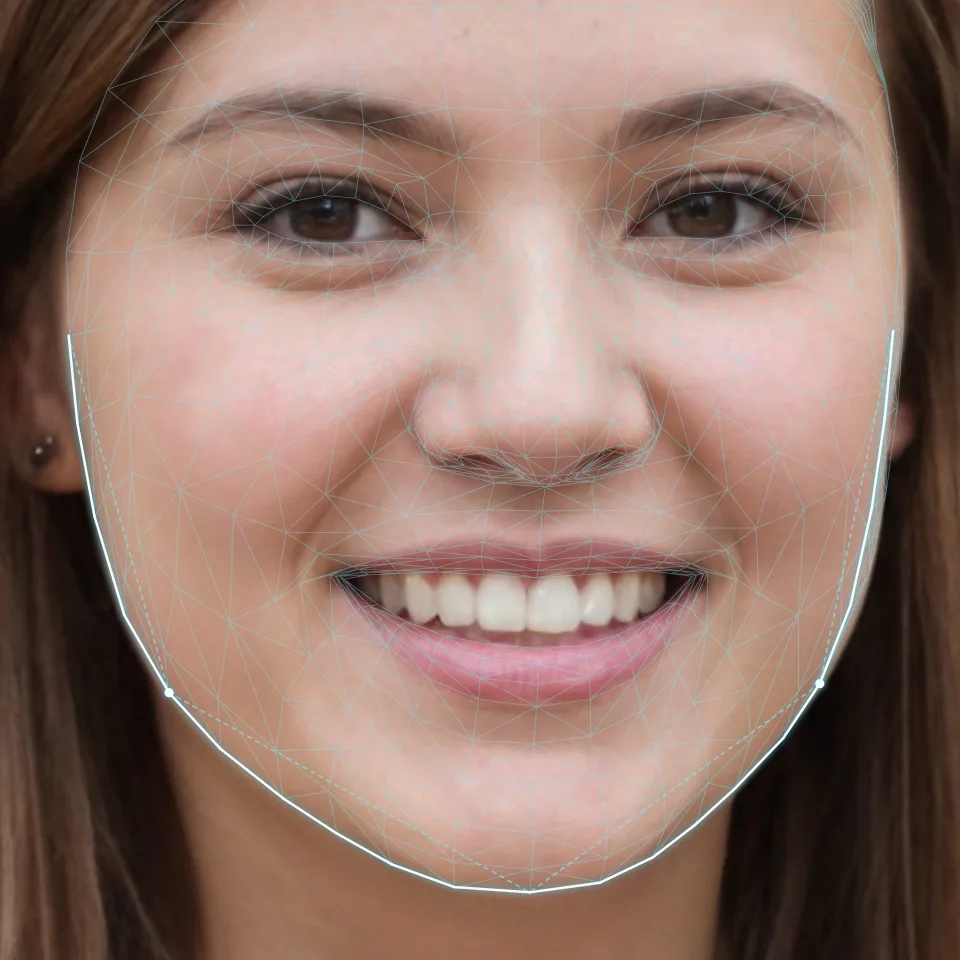
With stubble, how tidy it looks depends largely on the edges, not the length. Where the edges sit is a barber’s convention, not a measurement of anything, and the guides do not agree exactly.
Neckline, the lower border:
- One to two fingers above the Adam’s apple. Philips lays one finger flat above it; another guide says one to two finger widths above its highest point; a barber exam study guide says two finger widths, about 1 to 1.5 inches, which is 2.5 to 3.8 cm. Start at the higher number. Cutting lower is easy, and putting it back means waiting.
- A U shape. From that point, draw a U-shaped curve out to each side, ending below the ear at the back of the jawbone, passing about one to two fingers below the jawline at the sides. Do not run the line along or above the jawbone; that study guide says it gives a floating beard and makes the neck look thicker. And do not let hair run down to the collarbone. Shave clean below the line.
- Stubble only: do you need it? Philips says you can skip it. Stubble that runs down to the collar with no end is the first thing to look unkempt, so a soft line is the safer choice. That is my judgement.
Cheek line, the upper border:
- A natural line: leave it as it is (Philips), and only clear the strays above the cheekbone (barber study guide).
- A clear line: a straight or slightly curved line from the bottom of the sideburn to the corner of the mouth. The lower the line, the more length it adds to the face (Philips); too low looks artificial and makes daily shaving harder (barber study guide). This is the same dial as cheek line height in the face shape article, so it is not repeated here.
- Sparse growth: do not draw a new line. Choose a style that lets you trim the sparse places off (AAD).
The lip line works the same way: close your mouth and leave a clear line about 1 mm above the lip, removing any hair that crosses it (Philips).
Cut the line with a trimmer that has no guard, running along the line, and clear below it with a razor or trimmer, lubricating first just as for any shave. No research gives a frequency for the edges; the only numbers you can check are these: wash your face and stubble daily, change a blade every 5 to 7 shaves, wash the guards and let them dry. When the edge starts to blur, redo it.
Stubble and a fresh shave in front of the camera
A photo records reflections, not hair. Four things reach the picture: shadow, shine, redness, and which way the light comes from.
Shadow. Short, dark hair on lighter skin can blur at a distance into a grey-blue shade. That is my inference; I found no study. Shaving cuts only at the surface and the hair shaft below the skin remains, so even a clean shave can leave a faint tint. As for makeup, one makeup blog says blue shadow is covered with an orange corrector under foundation, only where it shows. That is colour-wheel logic, and I found no test of it.
Shine. Moisturiser and aftershave put on straight after a shave leave a film on the cheeks and chin that catches the light. That is an inference. In photos, shine shows first on the forehead, the bridge of the nose and the chin; see uneven skin in photos. The AAD says use beard oil sparingly to avoid a greasy look.
Redness. Redness from a fresh shave, and razor bumps, show up on camera. Photographers’ advice runs from shaving the night before to shaving at least an hour before; nobody has measured it. You can measure your own timeline: same spot, same light, a photo at 30 minutes, 3 hours and the next morning, and see when your skin settles. The AAD puts a 5 minute cool compress after shaving; you can do the same before a photo.
Light direction. Side light rakes across the skin and pulls out surface grain, and short stubble is surface grain; that is reasoning. With a window in front, the light flattens it. A ceiling lamp throws shadow under the chin onto the neck, the very place the neckline sits; see selfie lighting. To see how your stubble looks in different light, keep the spot the same and shoot once with the window in front and once at 45°.
What a photo can tell you is how the jawline reads in that photo. It cannot tell you whether a clean shave or stubble looks better. That choice stays yours.
FAQ
Should I shave with the grain or against it?
With the grain. The AAD, the NHS and Cleveland Clinic all say so, and the AAD adds that shaving against the grain irritates the skin. If you do not know your grain, pull the skin taut in a mirror once to see it, and lift your chin to check under it.
Is an electric razor or a blade better for razor bumps?
I found no large trial that names a winner. For bump-prone skin the AAD and Cleveland Clinic point to a single-blade or electric razor and away from multi-blade cartridges, and the NHS says an electric razor is worth trying. Either way, keep it sharp or clean.
What do I do about razor bumps after shaving?
Hold a cool, damp cloth on the skin for 5 minutes, stop any aftershave that stings, and do not pick or pluck. The AAD says to stop shaving so the hairs can grow out: fewer bumps within a month, gone by three. See a doctor if changes do not help, or if bumps are hot, swollen and painful.
What guard number should I use for stubble?
Guard numbers are each brand's own. On Wahl a number 1 is about 3 mm and a number 4 about 13 mm, and the bare standard blade cuts to about 0.8 mm. Read the millimetres printed on the guard or the setting rather than guessing from the number.
Why does my face look blue-grey after shaving?
Shaving only cuts at the skin surface, so the hair shaft below it stays, and a faint grey-blue can remain. I found no study that explains why it looks blue. Soft light from a window in front of you shows it less, and one makeup guide covers it with orange concealer under foundation; that is colour-wheel logic, not a tested result.