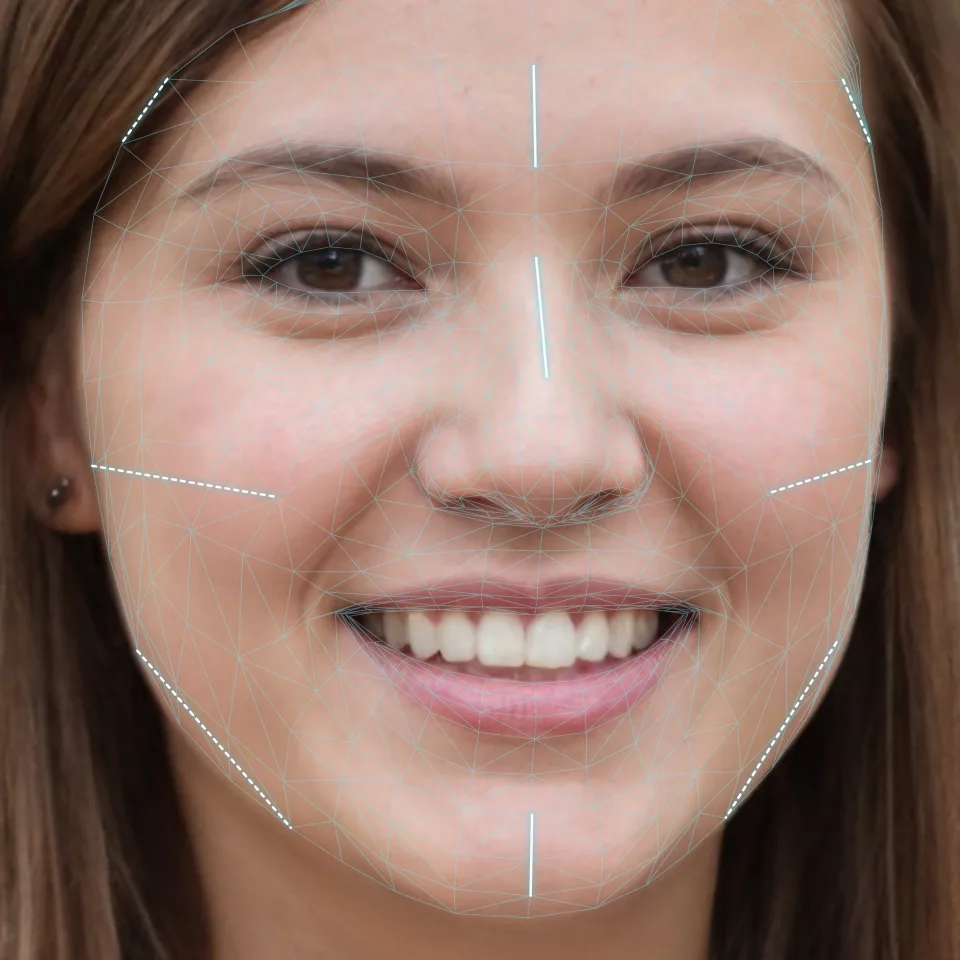
Start here
Facial depth: where the 3D look of a face comes from
Facial depth is mostly light on bone. The planes of the face, why side light beats front light, 4 steps to read yours. See your depth free.
Read the overview4 min read
Where facial depth comes from: bone and light, how light direction changes it, and where highlight and shadow go.
Some people feel their face looks flat, and others look like two different people in a selfie and an ID photo. This topic explains the biggest reason: a photo is flat, so relief can only be carried by light and shade, and the same face looks very different under a different light. It suits anyone who wants to know whether their facial depth comes from bone or from light, and anyone who wants to use light and makeup to give a face more relief in photos.
Start with facial depth, which shows how a face is built from planes pointing different ways and why light decides most of what shows. Next comes lighting and facial depth: the five common light positions from flat to split, where each step to the side adds shadow, and what a window, a ceiling light and a ring light each do. Last, highlight and contour basics. Highlight and contour just add a little light and shadow, and where they go depends on which way each plane faces. Remember that measuring proportions wants even front light and showing depth wants side light, and one photo rarely does both.
More depth does not make a better face, only a different photo. Flat light smooths out skin texture; side light shows relief and texture too. So do not compare two photos taken in different light to decide whose face has more depth. Check that the light matches first.
Facial depth is mostly light on bone. The planes of the face, why side light beats front light, 4 steps to read yours. See your depth free.
How far forward and back a face seems to go in a picture: the nose standing out, the eye sockets set in, the area below the cheekbones receding. Bone and soft tissue set the relief, but how much of it shows in a photo is mostly decided by the light.
Move the light from the camera’s direction to the front-side, a little above eye level and roughly 25° to 50° off the lens axis, so one side of the face falls slightly darker. Flat light from the front lights both halves equally and hides the relief; a window or an overcast sky both work.
No. They only paint light and shadow: highlight goes on planes facing forward or up so they seem to come forward, and contour goes on planes that turn away, face down or dip in so they seem to recede. What changes is how the shading reads, not the bone.