Contents
Selfie lighting: why turn off the brightest lamp?Window light: where to stand and how farOverhead light and backlight: why the face goes darkColour: one kind of light, and not Auto white balanceSelfie lighting at a glanceFAQKey points
- The bigger the light next to your face, the softer the shadow edges.
- Closer to a window, shadows get softer edges but more contrast. Those are two different things.
- Ceiling light shadows the eye sockets, nose and chin; backlight keeps the face or the background, not both.
- Use one kind of light and a Daylight or Cloudy white balance. For proportions, face the window.
Selfie lighting: why turn off the brightest lamp?
At home you have three light sources: a window, the ceiling light and whatever is bright behind you. Counterintuitively, the brightest, the ceiling light, is usually the worst. The best is a window without direct sun, with you facing it.
Size and direction matter, not brightness. The bigger a light is next to your face, the softer its shadow edges; light from the front throws your features’ shadows out of the lens’s view. A window is big and in front; a ceiling light is small and overhead.
To test any light, hold a hand in front of your face: a crisp shadow edge means hard light, a slow fade means soft.
Window light: where to stand and how far
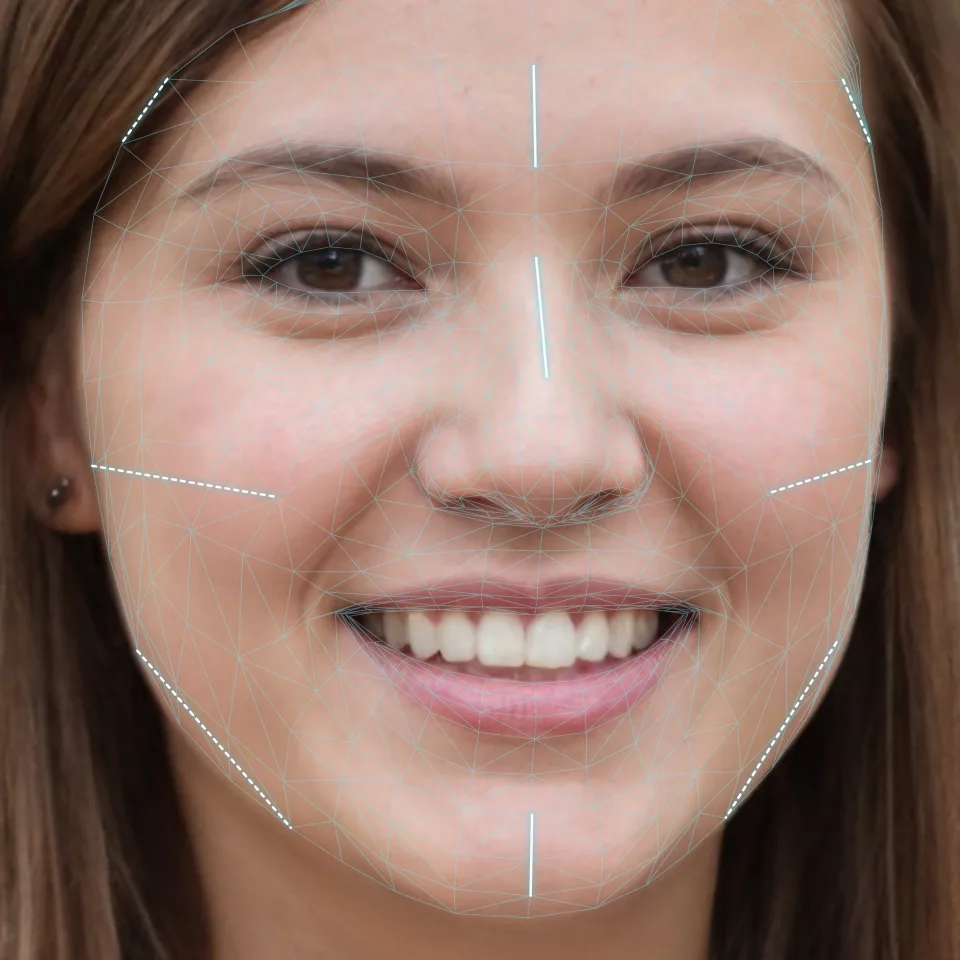
- Facing the window: both sides equally bright, fewest shadows, flattest face.
- At 45°: one side lit, the other in soft shadow.
- Window to one side: a bright half and a dark half.
- Back to the window: your face falls into shadow (backlight, below).
Stand 2 to 6 feet away; further back it becomes ordinary room light. Moving closer changes two things often taken as one. The window grows next to your face, so shadow edges soften. But less light bounces back from the room, so the gap between bright and dark sides grows. A white sheet opposite the window fills in a dark side.
Overhead light and backlight: why the face goes dark
Ceiling light points down. The brow bone shades the eye sockets, the nose the upper lip, the chin the neck. Right under the fixture is the worst spot. The five classic light patterns are in lighting and facial depth.
Backlight puts the window or sky behind you, and the phone must choose: expose for your face and the window turns white, or for the window and your face goes dark. Three ways out:
- Turn so the light reaches your face, or put the window to one side.
- Hold paper or a towel in front of you to bounce light back onto your face.
- Tap your face on the screen to expose for it, and accept a bright background.
Colour: one kind of light, and not Auto white balance
Open-sky window light runs cool; desk lamps and many room lights run warm. Put both on one face and one cheek turns yellow, the other blue, hard to fix later. Switch every lamp off and use the window alone.
Auto white balance guesses again on every frame, so skin drifts warmer and cooler across a set. In a camera or a phone’s pro mode, pick Daylight or Cloudy. Overcast light runs a little blue; the Cloudy preset or a small warm shift afterwards handles it.
Overcast daylight is the easiest even light: the clouds make the sky one huge lamp, so shadows barely have edges. From a doorway, face the brightest part of the sky.
Selfie lighting at a glance
| Light | On the face | When | What to do |
|---|---|---|---|
| Facing a window | Even, fewest shadows | Reading proportions | Sheer curtain for direct sun |
| Window at 45° | Soft shadow on one side | Everyday photos | White board on the dark side |
| Ceiling light | Dark eye sockets, under nose and chin | Avoid | Lamp off, use the window |
| Backlight | Dark face or white background | A bright edge on the hair | Turn, white card, tap your face |
| Window plus warm lamp | One side yellow, one blue | Never | Lamps off |
| Overcast outdoors | Soft and even | Any time | Cloudy white balance |
For a photo you want to read proportions from, or to give a face report, only the first row matters. Once shadows deepen, the edges of the cheekbones and jaw follow the light instead of the face. The rest of the setup is in front-facing photo.
FAQ
Why does my skin look blue in photos?
Overcast and open-sky window light run cool. Use the Cloudy preset or warm the photo slightly. If only one side looks blue, a warm lamp is mixing in.
What if direct sun comes through the window?
It leaves bright patches and hard shadows. Draw a sheer curtain, wait for a cloud, or step out of the sun but stay by the window.
Is backlight always bad?
No. It draws a bright edge around the hair, fine for everyday photos if something fills the face from the front. For proportions, front light is steadier.