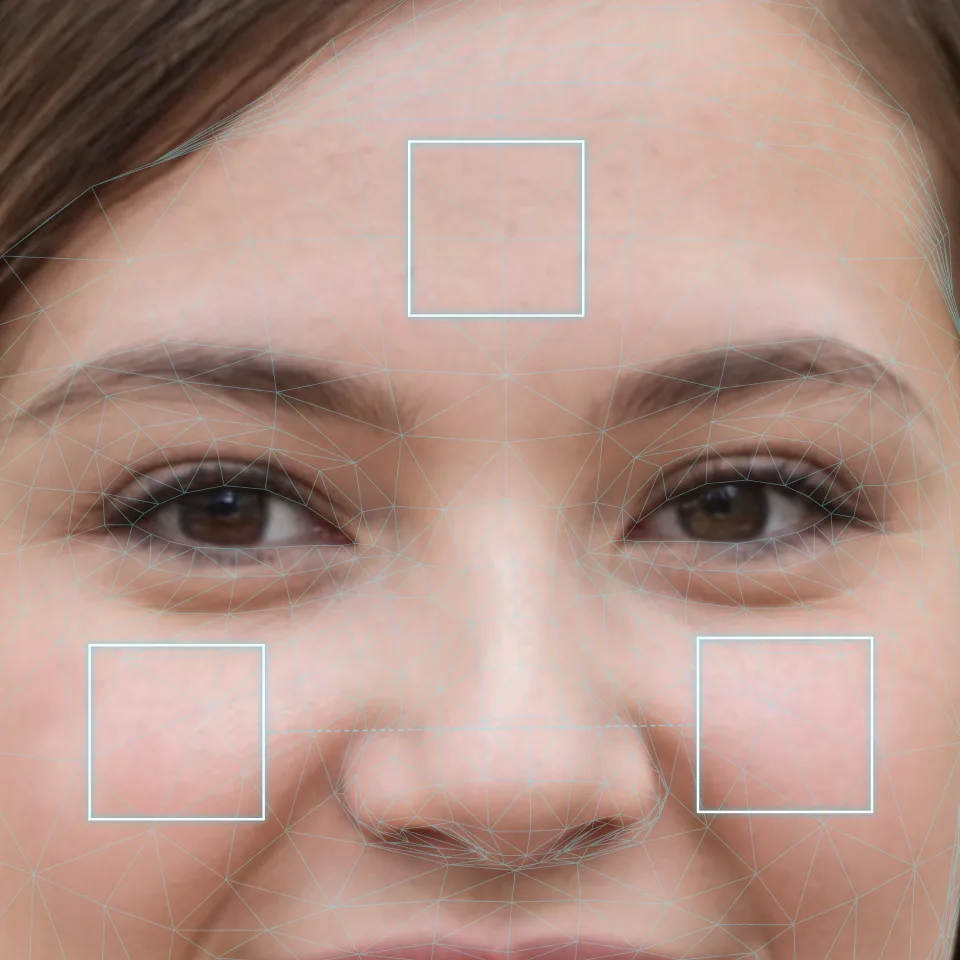
Start here
Even skin tone: what it means, and how much of it is the light
Even skin tone means cheeks and forehead match in one photo, not that skin is light or deep. Measure it with a color picker. Free skin check.
Read the overview4 min read
What even skin tone means, why skin looks patchy in some photos, the three basics of cleansing, moisturising and sun protection, and how to tell your skin type.
Skin often looks worse in photos than in the mirror: one side dark, a shiny forehead, one cheek yellow and the other blue. This topic separates what comes from the skin from what comes from the light and the camera. It suits anyone who wants to see whether their skin tone is even, work out their skin type, or follow a simple routine without a shelf of products. By the end you can tell whether patchiness in a photo is the light or the skin, run the wash-and-wait test for skin type, and see that basic skincare comes down to cleansing, moisturising and sun protection.
Start with even skin tone, which explains that evenness is judged within one face and has nothing to do with how light or deep the skin is, and shows how to check it with a colour picker or a black-and-white copy. Uneven skin in photos then goes through what side light, top light, overexposure, mixed light and filters each leave behind. The last two are about everyday care: how to know your skin type uses the wash-and-wait test, and the basic skincare routine covers each of the three steps and the most common mistakes. A photo can show shine and evenness, but not skin type.
If you want to compare your skin over time, fix your set-up: the same window, the same spot and the same time of day, with no makeup or sunscreen on, and compare only with your own earlier photos. Skin type also shifts with season and climate, so do not treat one result as a lifelong label.
Even skin tone means cheeks and forehead match in one photo, not that skin is light or deep. Measure it with a color picker. Free skin check.
That the different parts of one face look alike: both cheeks equally bright, cheeks and forehead equally red. It has nothing to do with how light or deep the skin is, and it compares your face only with itself.
Suspect the light first. Retake the photo with the window on the other side: if the dark patch moves with the light, it was the light; if the difference stays put, look at the skin. Side light, overhead light, overexposure, mixed light and filters can all make an even face look patchy.
Wash your face, apply nothing and wait, then check for shine and for oil on a tissue. Sources differ on how long to wait, from 15 minutes to an hour, so pick one and keep it. The T-zone is oilier than the cheeks on nearly everyone, so note the two separately, and remember that a photo shows shine but not skin type.