Start here
Is facial asymmetry normal? Read your own face on a photo
Is facial asymmetry normal? Almost every face is uneven. Check yours in 5 steps and tell face from camera angle. A free report reads your symmetry.
Read the overview10 min read
Whether an asymmetric face is normal, how to check it, and how to keep photos from exaggerating it.
Most people who spot a difference between their left and right sides in a photo worry first. This topic is for them. It helps you judge whether your asymmetry is normal, where exactly it sits, and how much of it comes from the camera rather than your face. By the end you can separate a real difference in the face from one made by a turned head or lopsided light, and you will know what a symmetry test can and cannot tell you.
Begin with whether facial asymmetry is normal, which gives the overall answer and a way to check your own photo. Then read the face symmetry test guide, which compares three home methods: flipping a photo, joining two left halves or two right halves, and marking pairs of points along the midline. They are far from equally reliable. If only one feature bothers you, such as a smaller-looking eye, uneven mouth corners or a fuller cheek, finish with the uneven face guide, which goes through the face part by part. And if an asymmetry appeared suddenly, see a doctor first, then come back to these guides.
This topic will not hand you a symmetry score. It cares about error: when you take several photos the same way, which differences show up every time, and which belong to one photo’s angle and light? Knowing that is worth more than knowing a difference to the millimetre.
Is facial asymmetry normal? Almost every face is uneven. Check yours in 5 steps and tell face from camera angle. A free report reads your symmetry.
How closely the left and right halves of a face mirror each other. Almost every face is slightly uneven, mostly in the lower half, and most people cannot see it; a “bigger side” in a photo is often just the angle of the head.
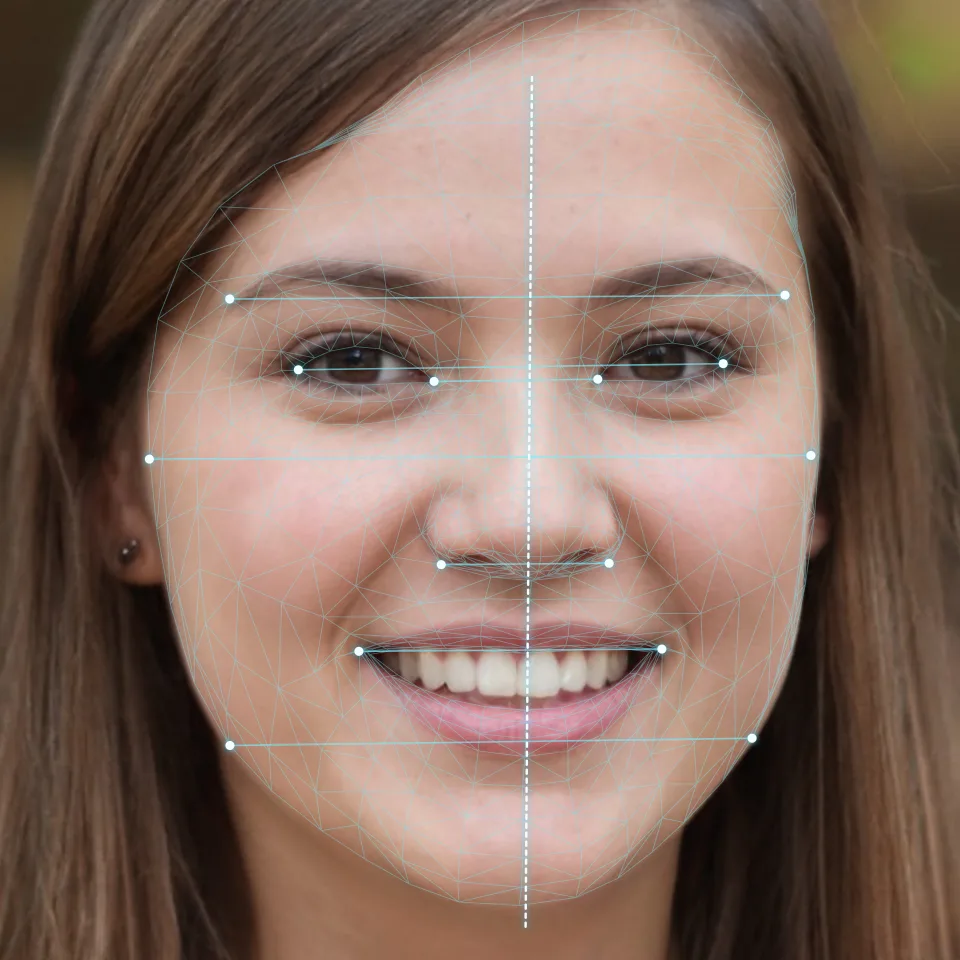
Take an evenly lit front-facing photo, find several pairs of matching points and compare how far each one sits from the midline. If every pair leans the same way, your head was probably turned; a difference in the same pair across three photos taken the same way is a steady one.
Not necessarily. In studies symmetry predicted ratings in one set of faces and not in another, and a “perfectly symmetric” face built from two copies of one half often looks odd. Slight left-right differences are in everyone.