Contents
Average face: what the term meansWhy an average face looks pleasant: three explanationsDoes averageness matter on its own? Studies disagreeLimits: the best-liked faces are not averageWhat an average face means for your own faceFAQKey points
- An average face is a composite, made of photos lined up by the eyes and mouth and averaged point by point.
- In a 1990 study, composites were rated above almost every face used to make them, and more so as more faces were added.
- Averaging makes a face more symmetric and its skin smoother, and may make it easier to process.
- Composites of attractive faces beat composites of all faces, and the best-liked faces are not the most average.
Average face: what the term means
An average face is not a plain-looking face. It is a composite image.
To make one, you line up many front-facing photos by the eyes and mouth, scale them to one size and average each point. The more faces go in, the less the result looks like anyone.
Francis Galton noticed this first. In the late 1800s he exposed several portraits onto one photographic plate, hoping to find the “typical look” of a group. That failed, but he saw that the composite looked better than each of its parts.
In 1990, Langlois and Roggman redid it by computer. In three sets of male and three of female faces, composites were rated above almost every single face, and more faces meant higher ratings.
Why an average face looks pleasant: three explanations
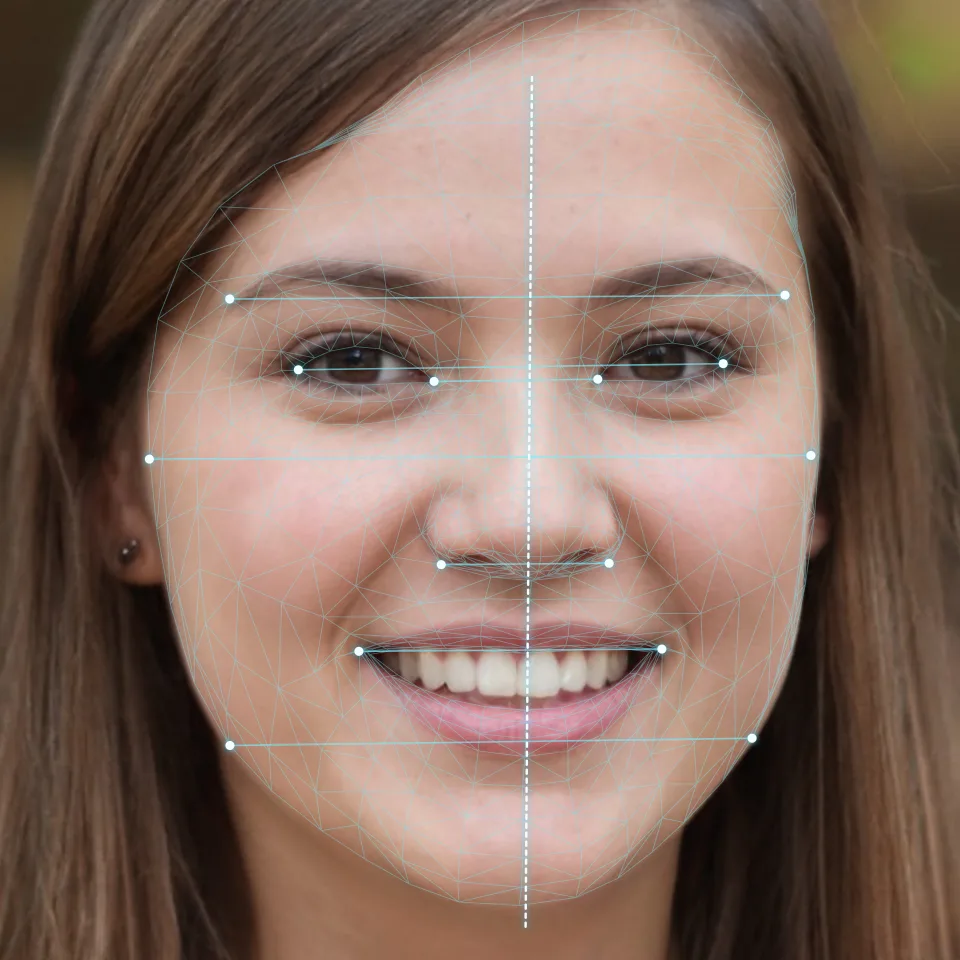
Several explanations have been offered, and all can be partly true.
- More symmetry. Every face has small random left-right differences. Averaging cancels them out, so the composite is closer to a mirror image.
- Smoother skin. Averaging point by point wipes out wrinkles, spots and texture. One German research team argues this is the main reason composites look good.
- Easier to process. Things close to a “prototype” are recognised faster. A 2006 experiment with dot patterns and shapes found that the closer a pattern was to its prototype, the faster it was sorted and the more it was liked.
Symmetry and averageness are tangled for a simpler reason too: average a face with its mirror image and the result is symmetric by construction. Do that to the sample photo and each of the seven pairs would sit equally far from the midline.
Does averageness matter on its own? Studies disagree
If the appeal came only from symmetry and smooth skin, averageness would not matter. Studies have tried to pull them apart:
- A 2004 study used profiles, which have no left and right to compare. Profiles moved toward the average shape were still preferred.
- A 2009 study in Japan measured both. For female faces only averageness had an effect; for male faces both did, and neither effect was large.
- The German team holds that skin is the main factor. In 1994 Langlois and colleagues argued that no other explanation accounts for their results.
So averageness probably has its own effect. How the credit splits between averageness, symmetry and skin is still open.
Limits: the best-liked faces are not average
Pleasant does not mean the more average, the better.
- A 1994 study found that a composite made only from highly rated faces was preferred to one made from all the faces. Exaggerating how it differed from the overall average made it more liked still.
- The German team saw the same: the better looking the faces that go in, the better the composite. Composites of low-rated faces stay low.
- “Average” also depends on which faces you average. Change the set and the average face changes. So always ask: the average of which faces?
So an average face is a floor, not a finish line.
What an average face means for your own face
One photo cannot tell you how far you are from “average”. Averageness belongs to a set of faces, not to one face; researchers pick a set first and compare each face with it. A face report from one front-facing photo can show where your own features sit, which is a different question.
What the idea does is point to what shapes a first impression:
- How features work together matters more than any single feature. See facial harmony.
- Left-right differences in photos come largely from the angle. See facial symmetry.
- Smooth-looking skin. For photos, use soft light from the front, such as a window. Side and overhead light deepen skin texture.
How averageness compares with the golden ratio is covered in is the golden ratio face real.
FAQ
Is calling a face "average" an insult?
No. Here "average" is a technical term for a composite of many faces, not a word for plain.
Can I see my own face averaged?
Not from one photo; an average face needs many faces. Blending your photo with its mirror image gives a symmetric you, not an average face.
Is a face closer to average always better looking?
No. Composites beat most single faces, but the highest-rated faces tend to differ from the average in some ways.