Contents
What does san ting mean? The upper, middle and lower zonesHow is it measured? One front-facing photo gives the proportions of san tingWhich part of your face is it?How does san ting fit with the five mountains and the twelve palaces?Should you measure it?FAQKey points
- San ting is the traditional division of the face into upper, middle and lower zones; the old books read rank, long life and wealth from which one is long.
- The books give only names of places, no measurements, and draw the lines in more than one way. With the version closest to the artists' facial thirds, one front-facing photo can measure how much each zone takes.
- We found no study that tests san ting. The proportions can be measured; rank, long life and wealth you can then work out yourself from the old books.
What does san ting mean? The upper, middle and lower zones
San ting (三停) is how traditional Chinese face reading cuts the face into three zones: the upper one is heaven, the middle one is people, the lower one is earth. The old books look at which zone is long and full and which is short, and from that judge a person’s rank, long life and wealth.
| Zone | Roughly where | What the old books say |
|---|---|---|
| Upper zone | Hairline to brow | Long and full, square and broad: “rank” (贵) |
| Middle zone | Brow to nose base | High and straight: “long life” (寿) |
| Lower zone | Nose base to chin | Level and full, upright and thick: “wealth” (富) |
The books say it is best when the three zones are in balance. They never say how much difference counts, and the lines are not drawn in just one way; this table uses the one closest to the artists’ facial thirds.
A saying goes: “Long upper zone, a busy youth; long middle zone, luck and plenty; long lower zone, a lucky old age.”
How is it measured? One front-facing photo gives the proportions of san ting
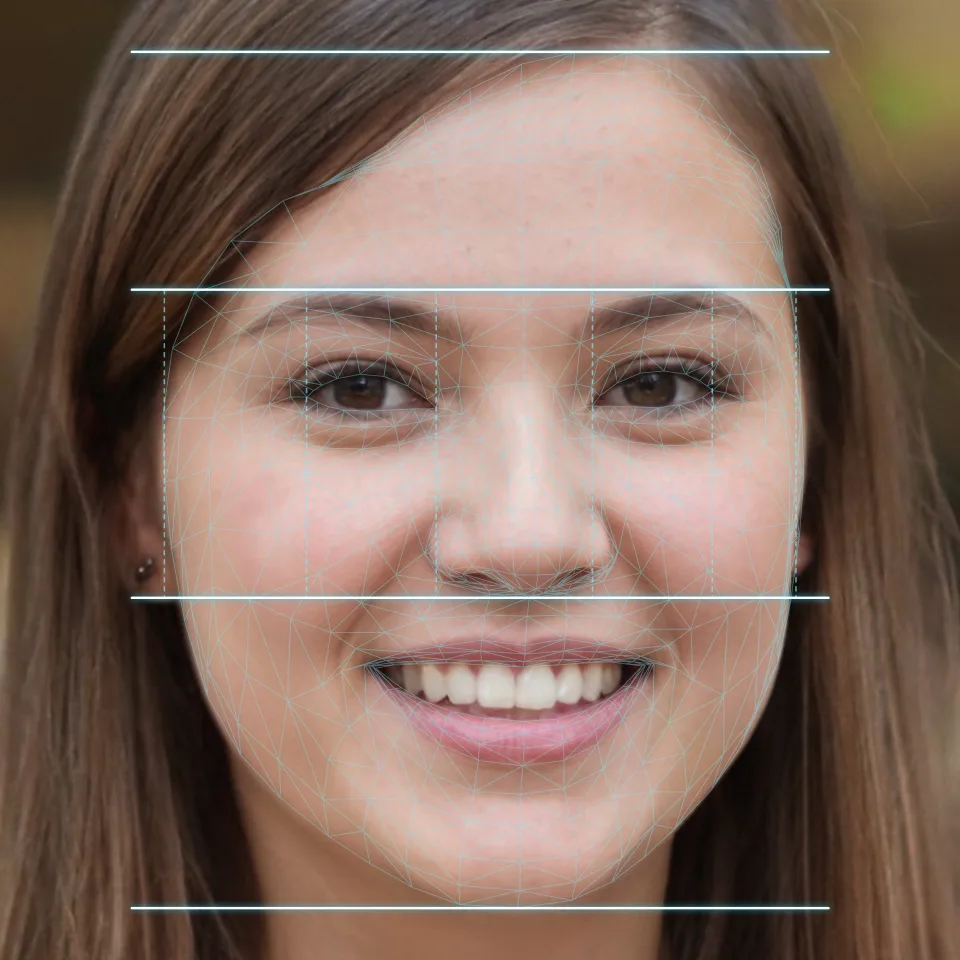
In the books, san ting is only names of places on the face. There are no measurements, and the lines are not drawn in just one way. To measure, we use the version in the table above: the upper zone runs from hairline to brow, the middle from brow to nose base, the lower from nose base to chin.
FacialRate draws a few cyan lines on your photo at the hairline, brow, nose base and chin, splits the face height into three parts, and writes how much each part takes. It also splits the face width into five parts, each with its share. One photo, a few seconds, free.
One thing to know first: the hairline is estimated, not detected, so the upper zone is the most likely to be off. For how to take the photo, see Front-facing photo: angle, light and distance; to measure by hand, see What are facial thirds and fifths? Measure your own face.
Which part of your face is it?
Where san ting falls on your face; the report calls the three parts upper, middle and lower:
- Upper zone, the forehead: hairline to brow. The hairline is estimated, so this is the least reliable.
- Middle zone: brow to nose base. Both ends are clear, so it is the most reliable.
- Lower zone: nose base to chin. Both ends are clear too.
Whichever of the three takes the biggest share is, roughly, the one the books call “long”.
How does san ting fit with the five mountains and the twelve palaces?
Face reading is a whole system, and san ting is only one part of it. San ting cuts the face into three zones from top to bottom; the five mountains and four rivers (五岳四渎) look across it at the high and low points: the five mountains are the forehead, nose, chin and the two cheekbones, and the four rivers are the ears, eyes, mouth and nose. The twelve palaces (十二宫) are twelve places on the face, such as the life palace, the wealth palace and the career palace, and each is said to govern one area of life.
The books use them together. In the passage on the “appearance” palace, the Shen Xiang Quan Bian says to look at the five mountains first and then judge the three zones; when the zones are balanced and the mountains stand well, it speaks of wealth, rank and honour. We found no test of these claims either; only the proportions of san ting can be measured.
Should you measure it?
- You want to know which zone is longer or shorter: worth one measurement. The report shows how much each of the three takes.
- You want to know rank, long life and wealth, or the ups and downs of a life: that cannot be measured. The books never say how long counts as long, and we found no research testing these claims; more than two thousand years ago Xunzi said: “Judging the face is not as good as judging the heart.” We can measure the proportions of san ting.
- You are just curious which zone is your long one: that we can answer. It is a share, not a verdict.
If you want the proportions, measure once; then use the old books to work out rank, long life and wealth for yourself.
FAQ
What is san ting in face reading?
San ting is how face reading cuts the face into three zones from top to bottom: upper (hairline to brow), middle (brow to nose base) and lower (nose base to chin). The old books read rank, long life and wealth from which zone is long; it is tradition, and we found no study that tests it.
What do a long upper, middle or lower zone mean?
The saying goes: "long upper zone, a busy youth; long middle zone, luck and plenty; long lower zone, a lucky old age." It is tradition, and we found no research that supports it.
What does it mean for the three zones to be equal?
The old book says balance is best: "when the three zones are equal, success lasts a lifetime." How much difference counts as unequal, the book does not say, and we found no study that tests it.
What ages do the three zones correspond to?
The Shen Xiang Quan Bian gives no ages for the three zones of the face. It says only that the forehead rules early fortune, the nose middle age, and the chin area the last years. Common web versions say 15-30, 31-50 and 51 and over, or 10-20, 20-40 and 40 and over; they disagree.
What is the difference between san ting and facial thirds?
San ting is a term of traditional face reading, used to read rank, long life and wealth. Facial thirds is an artists' rule for placing features. The positions are close, the use differs. Fifths belong to the artists' canon only: the word does not appear in the 14 volumes of the Shen Xiang Quan Bian.