Contents
Long midface: compare it with the lower third, not the upperThe sample photo: middle 284, lower 286Two measuring traps: the brow line and head tiltMakeup: add a horizontal line in the middleBangs: move the top edge of the face downFAQKey points
- The middle third runs from the brow line to the base of the nose; hair doesn't hide either end and expressions barely move them.
- Use middle ÷ lower. Guides treat 0.95 to 1.05 as usual; only clearly above counts as long.
- The two usual traps are where you put the brow line and a tilted head.
- What makes it look shorter adds a horizontal line, from blush and flatter brows to lower-lash colour and bangs above the brows.
Long midface: compare it with the lower third, not the upper
The middle third runs from the brow line to the base of the nose. In practice you only compare it with one other third: the lower one.
One number does the job: middle ÷ lower. Several measurement guides give 0.95 to 1.05 as the usual range, and only a value clearly above 1.05 counts as a long middle third. It is a working range, not a hard line.
Why not the upper third? Its top end is the hairline, the hardest point to place. On the sample photo the upper third is 219 and the middle 284, which makes the middle look about 30% longer. But that hairline was estimated. Compare with the lower third and the answer flips.
The sample photo: middle 284, lower 286
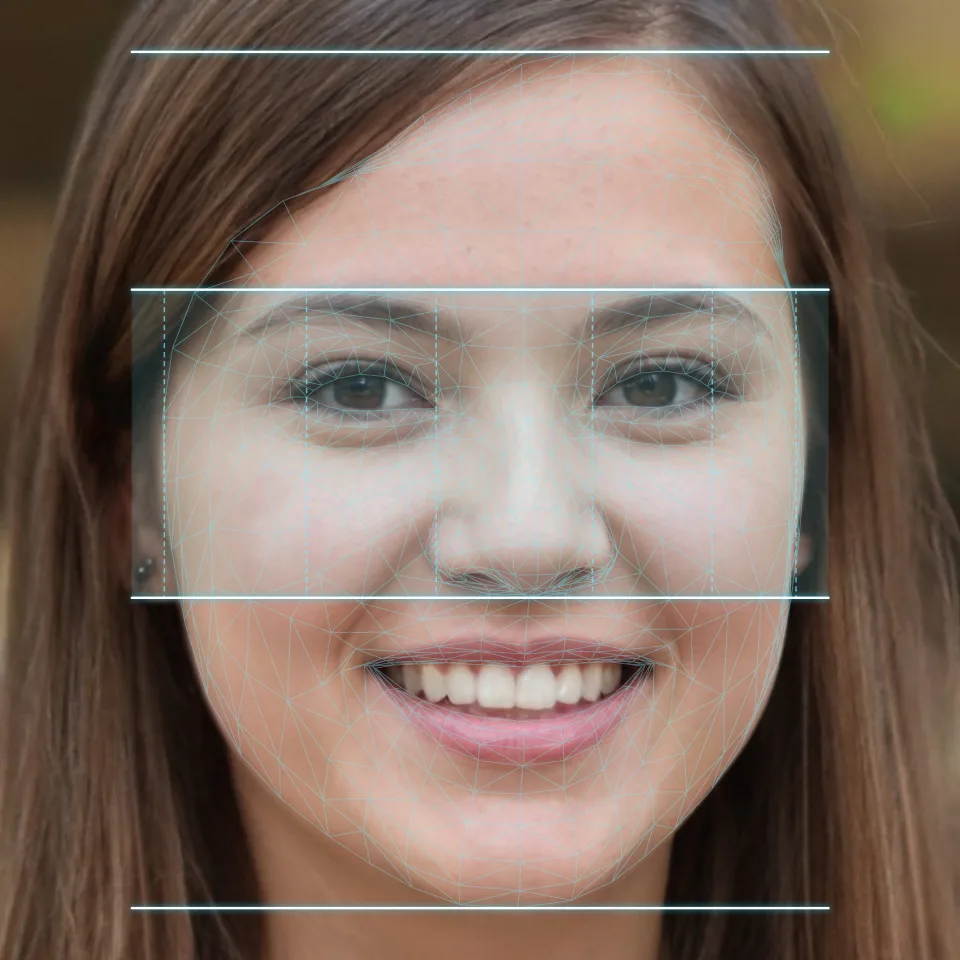
On the sample photo the middle third is 284 pixels and the lower third 286, so middle ÷ lower = 0.99. Not a long midface.
The middle third is the easiest of the three to measure. The brows and the base of the nose sit in the centre of the face, hair doesn’t cover them, and they barely move when you smile. The lower third is less steady: open your mouth and the chin moves, as the lower third article explains.
It works the other way too: a short lower third can make a normal middle third look long by contrast. Measure both. The photo and line steps are in the facial thirds guide, and a face report from a front-facing photo lists the thirds together.
Two measuring traps: the brow line and head tilt
The brow line. The top edge of the brows, a line through the brow peaks, or the glabella between the brows: switch and the top of the middle third moves, all of it landing on the middle third. Measure from the top edge of the brows and your brow pencil changes your number. Use bare brows, or the glabella, which measurement studies use and no pencil moves.
There is also a word trap. Japanese and Korean makeup articles call the span from the lower eyelid to the upper lip the 中顔面 or 중안부. Some Chinese ones mean between the brows to the nose tip. Check which span is meant.
Head tilt. Tip your head down or up and the base of the nose shifts against the brows, so the ratio drifts. Keep your head level and look into the lens.
Makeup: add a horizontal line in the middle
Makeup artists share one idea here: put something horizontal between the brows and the base of the nose.
- Blush across, not down. A wide oval. Some place it just under the eyes, some level with the nostrils; all run it sideways.
- Flatter brows. Keep the arch low; some artists also draw the brow heads a little lower.
- Colour on the lower lash line. A wash of shadow or a defined aegyo-sal (the band under the lower lashes) extends the eye downward and shrinks the blank space below it.
- Highlight only the nasal root. Lighting the whole bridge draws a vertical line.
These are artists’ habits, not results from controlled tests.
Bangs: move the top edge of the face down
Bangs don’t touch either end of the middle third. They change how much face you see.
- Bangs ending just above the brows draw a clear horizontal line at the top of the middle third.
- Wispy or curtain bangs do it more gently and add a little width by the cheekbones.
- Keep volume at the sides, not on the crown, which stretches the outline.
- Skip sleek centre-parted long hair: two vertical lines down the face.
Forehead height belongs to the upper third: see hairstyles for a high forehead.
FAQ
Does a long nose mean a long middle third?
Usually, but not always. On the sample photo the nose is 198 of a 284 middle third, about 70%. The rest runs from the brows to between the eyes, so brow height matters too.
Does the middle third change with age?
Yes, but slowly; facial proportions shift a little at a time over many years. To compare with an old photo, take both the same way.