Contents
Nose shape types: why most of them are side-view namesName the parts first: root, ridge, tip, wingsWhat a front photo can tell youOne table: which view shows which traitContour: start at the brows, check from the sideFAQKey points
- Type names answer two side-view questions: is the bridge straight, convex or concave, and does the tip point up, level or down?
- A front photo cannot show a hump. It shows width, length and the tip.
- Describe each part on its own. In medical terms "wide" means only the distance between the nostril wings, and adult noses have no general norm.
- Nose width equal to the inner-eye gap is a drawing rule. In one study about 1 in 10 people met it.
Nose shape types: why most of them are side-view names
Straight, Roman, hawk, concave, upturned: behind these names sit two questions, both answered from the side.
First, the bridge. Draw a line from the root, the dip between the eyes, to the tip. A bridge on the line is straight; one bowing in front is convex, with the hump usually a third of the way down; one dipping behind is concave.
Second, the tip: up, level or down? A convex bridge plus a drooping tip makes a hawk nose. A tip that turns up, showing more nostril from the side, makes an upturned nose.
One nose-shape guide says no type is better and none maps to a nationality. And a hump is invisible from the front, so matching a selfie to a chart of profiles rarely works.
Name the parts first: root, ridge, tip, wings
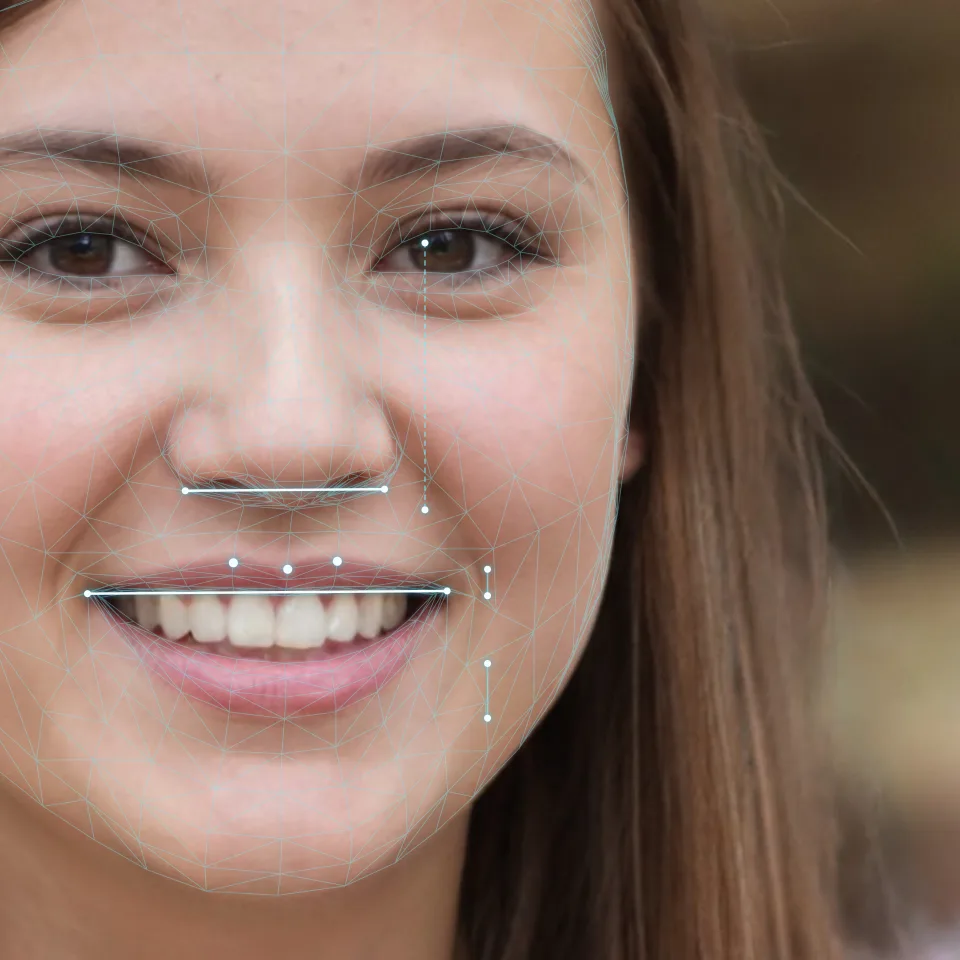
A medical glossary of facial terms names each area:
- Root: the highest, deepest part, between the eyes.
- Ridge: the line down the middle from root to tip. A “straight bridge” means this.
- Tip: where the ridge meets the columella, usually the point farthest from the face.
- Wings: the sides around the nostrils. The columella is the strip between them.
Two measurements matter. Length: root to base, where columella meets lip. Width: between the outer edges of the wings.
The glossary advises describing each part rather than “a wide nose”. Adult noses, it adds, have no general norm and keep growing slowly. On the sample photo: width 148, length 198.
What a front photo can tell you
- Width against the inner-eye gap. The drawing rule says equal; in one study about 1 in 10 people matched. The sample happens to: wings 148, gap 144 (see eye spacing). But it is smiling, and a smile widens the nostrils.
- Width against length. Width ÷ length × 100 is the nasal index; researchers sort noses into narrow, medium and broad, all common. The sample comes to about 75.
- Length. Nose length and the philtrum often trade off: one long, the other short. A long nose is not a big one.
- The tip. Width is read where wings meet tip. Two defined points or one soft round shape? Light changes that more than anything else.
One table: which view shows which trait
| Trait | View | How to read it |
|---|---|---|
| Nose width | Front | Outer edges of the wings, against the inner-eye gap |
| Nose length | Front or side | Root to base; read it with the philtrum |
| Ridge width | Front | No number, only a description |
| Tip width and outline | Front, clearest from below | Where wings meet tip; recheck in other light |
| Straight, convex, concave | Side | Line from root to tip: on it, in front, or behind |
| Tip direction | Side | Tip-to-lip angle, typically 90–115°; smaller droops, larger turns up |
| Root height | Side | Root forward or back in the profile |
The side rows need a true 90° profile. For the front rows, a face report built from one front-facing photo shows your nose alongside your other features.
Contour: start at the brows, check from the side
Makeup artists start with a matte nose, since shine makes it look bigger. Contour lines start at the inner end of each brow, run down the sides, stop above the nostrils and are blended toward the centre. Starting at the brows keeps both sides even. The usual giveaway is two dark stripes that only show from the side, so turn your head to the mirror before you finish. Contour only changes how light reads; see highlight and contour basics.
The mouth is usually measured against nose width next; see mouth to nose ratio and lip shape types.
FAQ
Can a front photo show whether I have a hump?
No. A hump bows in front of the root-to-tip line, which only shows in profile. A front photo shows width, length and the tip.
Why does my nose look bigger in selfies?
Often it is the angle. A phone held low makes the nostrils and an upturned tip look bigger. Raise it to eye level and compare.
Can I measure how round my tip is?
No, only describe it, and light changes it most: move the light and the outline changes. Compare photos taken in the same light.