Start here
Strong vs soft facial features: one label, taken apart
Strong vs soft facial features is stylists' talk, not a measurement. Four traits, and what a photo can show. See your face type with a free report.
Read the overview4 min read
Strong or soft features: how present the features read, built from the brow-to-eye gap, eye shape, eye tilt, contour lines and the lower third; how to check each, and makeup and hair that follow them.
“Strong features” and “soft features” are stylists’ words. No study defines them, so sources disagree about what they mean. This topic is for anyone who has been asked “are your features strong or soft?” and could not answer, and for anyone who wants to choose makeup and hair to suit how their features read. By the end you can break the label into a few features you can see in a photo, you know which of them a front-facing photo can show and which it cannot, and you will see that strong and soft describe the features themselves, not how heavy the makeup is.
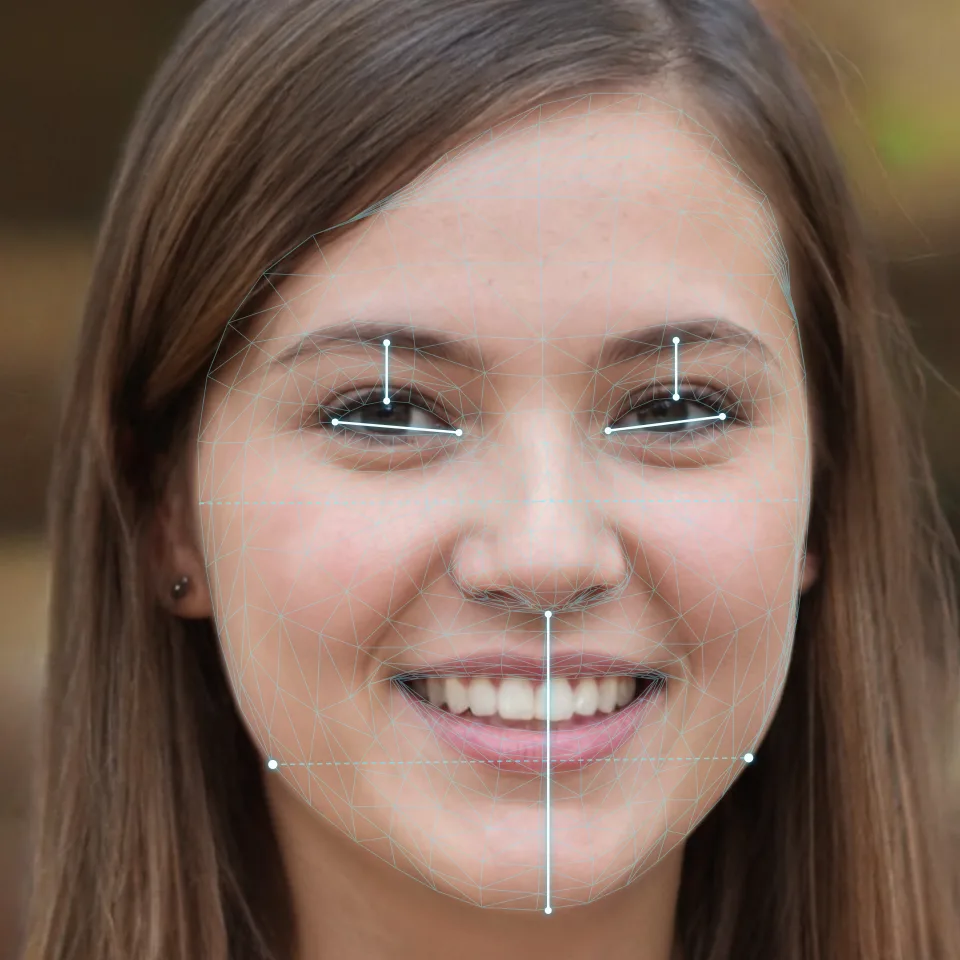
Start with the strong versus soft guide: where the idea comes from, which features it is split into, and where the sources part ways. Then read how to tell strong or soft features, which goes one feature at a time on a single photo, covering the brow-to-eye gap, eye shape, eye tilt, the jaw corner, how the lower face narrows and the lower third, instead of reaching a verdict from one number. Last comes the makeup guide, on how makeup and hair follow the lines and contrast of your features, or borrow the other direction in just one place.
Strong and soft are not good and bad, nor high and low. Most faces are a mix, and leaning one way on one feature and the other way on another is normal. This topic gives you a way to look at your own features, not a label. Features a front-facing photo cannot show, such as how high the nose bridge is or how deep-set the eyes are, are not worth guessing from it.
Strong vs soft facial features is stylists' talk, not a measurement. Four traits, and what a photo can show. See your face type with a free report.
Strong features jump out from across a room, while soft features read more lightly and people remember the face as a whole. These are stylists’ terms rather than measurements, and different sources list different features.
No. It is an overall impression built from several features, such as the brow-to-eye gap, eye shape, eye tilt, the jaw corner and the lower third. Any one number only reads as compact or open, long or short, beside other faces, which is why most faces are a mix.
No. Strong and soft describe the features, not the makeup. Makeup can follow the lines and contrast of your features, or borrow from the other direction in just one place, such as the brows, eyes or lips.