Start here
What is my eye shape? The common types and how to tell
What is my eye shape? Almond, upturned and hooded are ends of three scales, so check length, tail direction and lid. A free face report shows yours.
Read the overview4 min read
How to tell your eye shape, read the eye tail and the brow-to-eye gap, and match eye makeup and brows to them.
Eye shape names are confusing: almond, round, upturned, downturned, monolid, hooded. They do not all measure the same thing. This topic is for anyone trying to work out which kind of eye they have so they can choose eye makeup and brow shape to match. By the end you will see that an eye shape is really three separate readings: how tall the eye is against its length, which way the outer corner points, and what type of lid it has. The space between the eyes and the gap between brow and eye are different measures again. Makeup and brows change how long an eye reads, how open it looks and how far apart the eyes seem; they do not change the eye itself.
Start with what is my eye shape, which pulls the three apart. Upturned or downturned eyes shows how to measure the one angle and why it is the reading photos most easily throw off, and brow-to-eye distance covers the ways to measure that gap and why your own eye height makes the ruler. Once you have your readings, the two practical guides follow: eye makeup for your eye shape, for where liner and shadow go, and eyebrow shape for your face, for placing the head, arch and tail of the brow.
Before you measure, know that eyes are the easiest feature to throw off with a photo. Smiling, squinting, a tilted head or a phone held too low all move the corners and the lid. Keep a relaxed face and shoot at eye level for steady numbers. The two eyes are rarely identical either, so read each one separately.
What is my eye shape? Almond, upturned and hooded are ends of three scales, so check length, tail direction and lid. A free face report shows yours.
The familiar names are the ends of three separate scales: height against length (rounder or longer), tail direction (up or down) and lid type (monolid, hooded or with a crease). Rather than hunting for one name, check each of the three on a relaxed, level photo; “a bit of two types” is a normal result.
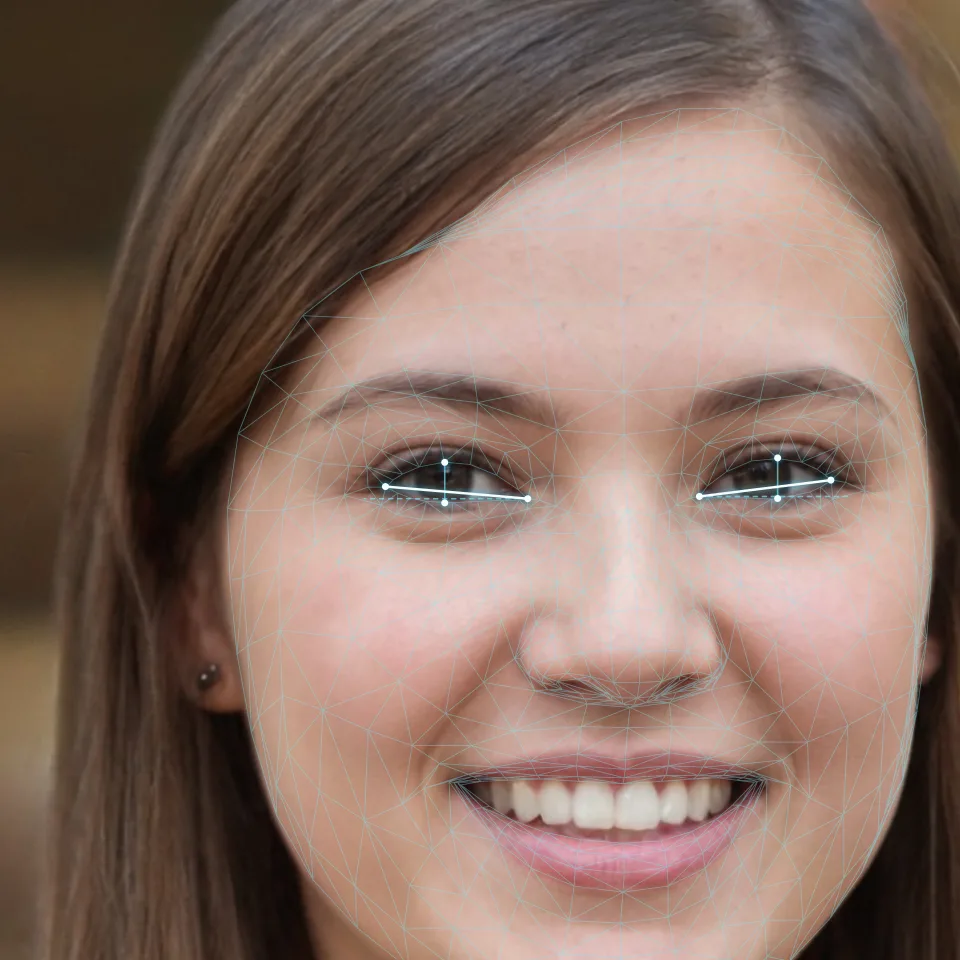
Join the inner and outer corner of one eye and see how far that line tilts from level: the outer corner higher means upturned. The average face already tilts slightly up, so exactly level is not the middle, and a tilted head or a low phone changes the angle, so keep your head level and the phone at eye height.
No. Eye makeup changes how long the eye reads, how much of it looks open and how far apart the eyes seem. Brows either echo or contrast the lines of the face, provided the head, arch and tail are placed well.