Start here
Jawline types: soft, moderate or defined
Jawline types come down to one line from ear to chin: soft, moderate or defined. How to trace yours and what hides it. See where yours sits, free.
Read the overview4 min read
Whether a jawline reads soft, moderate or defined, why photos change it, and what hair and contour do around it.
A jawline is one of the outlines that changes most from photo to photo. Raise your chin a little, lower the phone or move the light, and the same jaw goes from sharp to hazy. This topic is for anyone who wants to know where their jawline sits without being fooled by a single photo. By the end you can tell apart the turn of the jaw corner, the shape of the chin and how much the face narrows towards the chin, you know which of them a front photo can measure and which need a side view, and you can plan photos, hair and contour around whether you want the jaw shown or softened.
Start with jawline types, which sorts the corner into soft, moderate or defined. Then read chin types and face taper: one looks at the chin itself, the other at how much the face narrows going down. Jawline and face shape puts the corner and the width together to show how a face shape label gets squeezed out of them. Last come jawline in photos, which covers the photography, and jawline hairstyles, which covers hair, contour and beards. Decide before you read whether you want the jaw to show or to read softer.
The three jawline tiers and the chin shapes here are descriptions, not a ranking. If you want to compare before and after, use the same light and pose each time, or you will be comparing the photography rather than the jawline.
Jawline types come down to one line from ear to chin: soft, moderate or defined. How to trace yours and what hides it. See where yours sits, free.
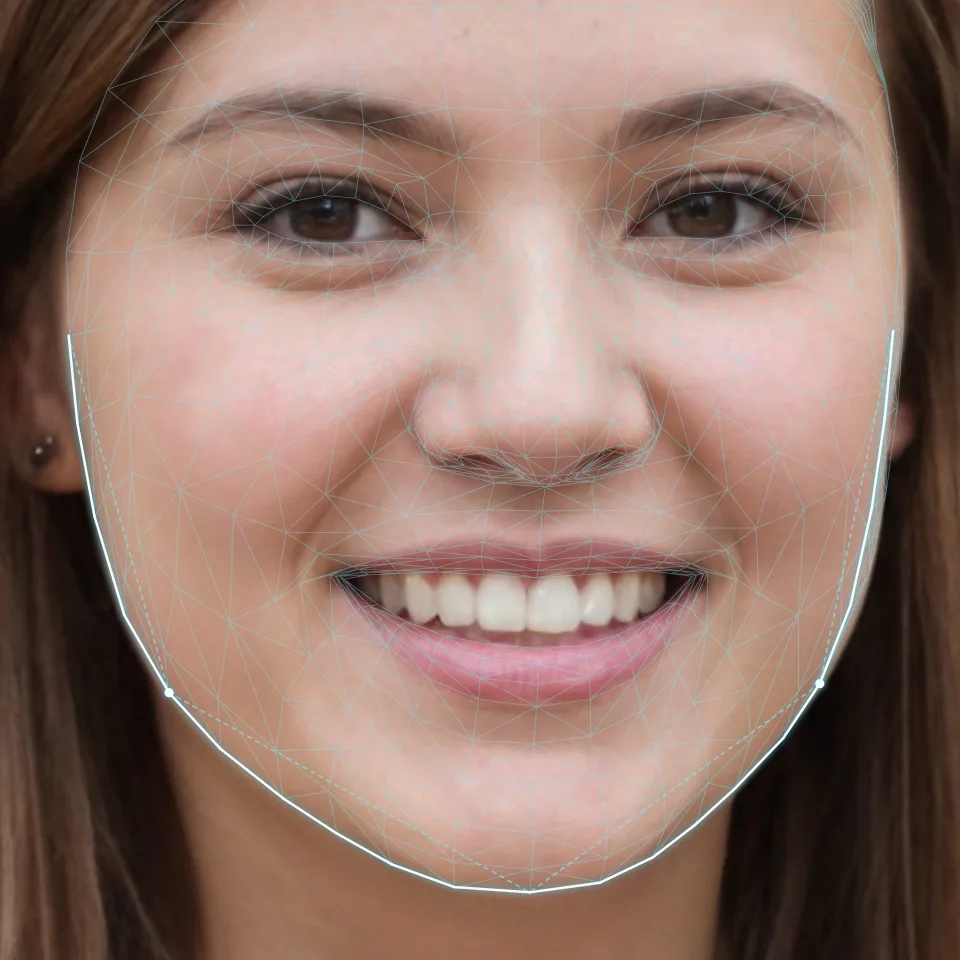
Trace the outline from below the ear to the chin and see how it turns: one continuous curve is soft, a gentle turn is moderate, and a visible corner is defined. The three words describe a shape; none is a grade.
A jawline in a photo is really a shadow edge between jaw and neck, not the bone itself. Chin position, camera height, light direction and hair all move that edge.
Push the chin forward and slightly down, hold the phone a little above eye level and let soft light come from above and one side. Standing further back with a timer, or using the rear camera, also helps, because a close front camera makes the sides and the jaw recede. To soften the jaw instead, work with side pieces and layers in your hair.