Contents
Lip shape types: what is actually being sorted?Take the right photo, then try the sampleHow to check each traitThe upper-to-lower ratio: 1 : 2 is a preference, not a normLip makeup that follows the five traitsFAQKey points
- A lip type is a combination of five traits: fullness, width, upper-to-lower ratio, bow depth and corner tilt.
- If no trait stands out, the mouth is balanced, and that is the most common result.
- Read it on a relaxed, unsmiling front photo. A smile stretches the upper lip and pulls the corners apart.
- On most faces the lower lip is taller, at about 0.7 to 0.8 upper to lower. The often-quoted 1 : 2 is one study's preference.
Lip shape types: what is actually being sorted?
Every name in a lip chart describes five things:
- Fullness: both lips’ height ÷ mouth width.
- Width: corner to corner, against face width.
- Upper-to-lower ratio: upper lip height ÷ lower, at the centre.
- Bow depth: how far the two peaks rise above the dip between them.
- Corner tilt: corners above or below the line where the lips meet.
When one trait stands out, it gives the name: a deep bow on a full upper lip is heart-shaped; corners below the lip line are downturned. When nothing stands out, the mouth is balanced, which one lip guide reports as the most common result.
Take the right photo, then try the sample
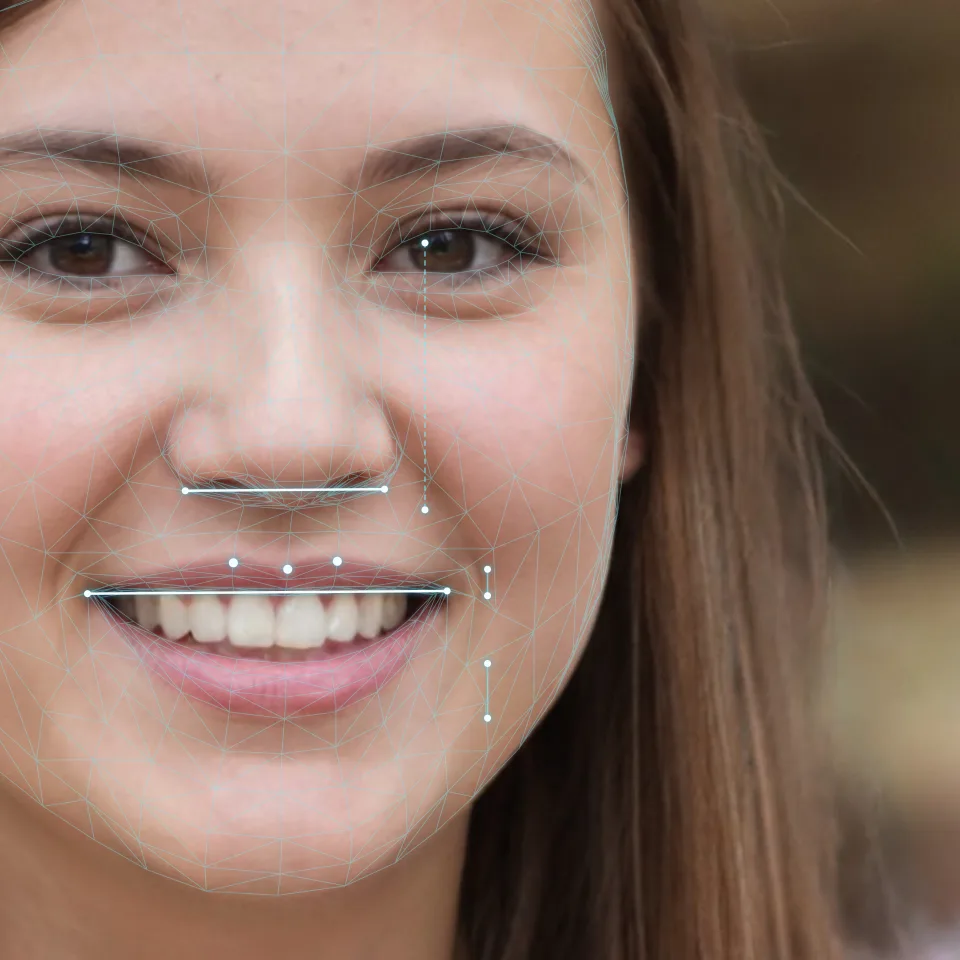
A medical glossary sets the pose for judging lips: face relaxed, lips lightly touching, teeth slightly apart, head level. Smiling or pouting changes the upper lip a lot. Photo setup: see facial thirds, and use the same relaxed pose if you want a face report.
The sample photo is a counterexample. She is smiling:
- Upper lip 20, lower 41: 0.49, which on paper is clearly bottom-heavy. But a smile stretches the upper lip, so 0.49 is not a usable reading.
- The bow peaks are level (729 and 728) and the dip sits 5 to 6 lower, about 2% of the 267 mouth width. One guide calls a bow pronounced above 3.5%, so this one is soft, though again measured on a smile.
How to check each trait
| Trait | How to check | One end | Other end |
|---|---|---|---|
| Fullness | Both heights ÷ mouth width (middle about 0.38) | Under 0.33: thin | Over 0.43: full |
| Width | Mouth ÷ cheekbone width (middle about 0.38) | Under 0.35: narrow; narrow and full is round | Over 0.40: wide |
| Ratio | Upper ÷ lower, at the centre | Under 0.55: fuller lower lip | 1.0 or more: fuller upper lip |
| Bow | Peaks above the dip ÷ mouth width | No peaks: U-shaped upper lip | Over 3.5%: heart if the upper lip is full, bow if not |
| Corners | Mouth closed: above or below the lip line | 5° or more below: downturned | Above: upturned |
The cut-offs come from that guide’s measurements of 18,630 faces: conventions, not medical criteria. To find the peaks, follow the two ridges under your nose down to the lip edge. Corners at different heights? Read uneven left and right face first.
The upper-to-lower ratio: 1 : 2 is a preference, not a norm
The glossary treats a fuller lower lip as the usual state. Adult measurements agree: the upper lip runs about 6 to 9 mm, the lower about 8 to 11 mm, so the common ratio is near 0.7 to 0.8. Top-heavy is the less common case.
The often-quoted 1 : 2 comes from a 2017 study in which 428 people ranked synthetic faces; a lower lip about twice the upper beat 1 : 1 and 2 : 1. That records the taste of those raters for those faces. Another face or another group could shift it. It is not a target. (The sample’s 0.49 sits near 1 : 2, but the smile made that number.)
Lip makeup that follows the five traits
Makeup artists mostly agree: overline only where you want more fullness, and stay on your natural border elsewhere.
- Uneven lips: take the smaller lip slightly past the border, keep the fuller one on it. With a fuller lower lip, put the lighter shade only at its centre.
- The bow: liner exactly on the natural peaks, never above them.
- Colour: darker at the corners, lighter in the centre. On full lips, keep colour inside the line and blend a deeper shade inward from the corners.
- Small lips: line about 1 mm outside the border and fill with liner before lipstick.
- Downturned corners: stop the lower liner just before the corner, angled slightly up.
Dry lips roll inward and read smaller, so moisturise first. Mouth against nose: mouth to nose ratio. The nose itself: nose shape types.
FAQ
Is it unusual for the upper lip to be fuller than the lower?
Less common, but it is only a proportion. It is called top-heavy and often comes with a clear bow.
My corners sit at different heights. How do I read the tilt?
Check your head is level, then read each side on its own. A small left-right difference is common.
Can my lip shape look different from day to day?
Yes. Dry lips roll inward and read smaller, and expression moves the corners. Moisturise and relax before the photo.