Contents
Uneven face: is it normal, and which part is it?One eye looks smaller: check the eyelid, then the browOne mouth corner sits higher: compare at rest and smilingOne cheek looks fuller: light, hair and angle fool you mostThe nose tip leans: the nose, or the whole midline?Every part at a glance: your face or the photo?FAQKey points
- A visible difference usually sits in one or two spots, not a whole half.
- A smaller-looking eye is usually a different lid fold or brow height.
- A smile pulls mouth corners apart; studies disagree on which side leads.
- The side nearer the lens looks larger, so turn the smaller eye toward the camera.
Uneven face: is it normal, and which part is it?
It’s normal. An asymmetrical face is the rule, since every face has small random left-right differences, mostly in the lower half; the numbers are in the guide to facial asymmetry.
This page goes one feature at a time, because “my face is uneven” almost always means one spot. For each: what it usually is, how a photo inflates it, and what makeup, hair and camera angle can do.
One eye looks smaller: check the eyelid, then the brow
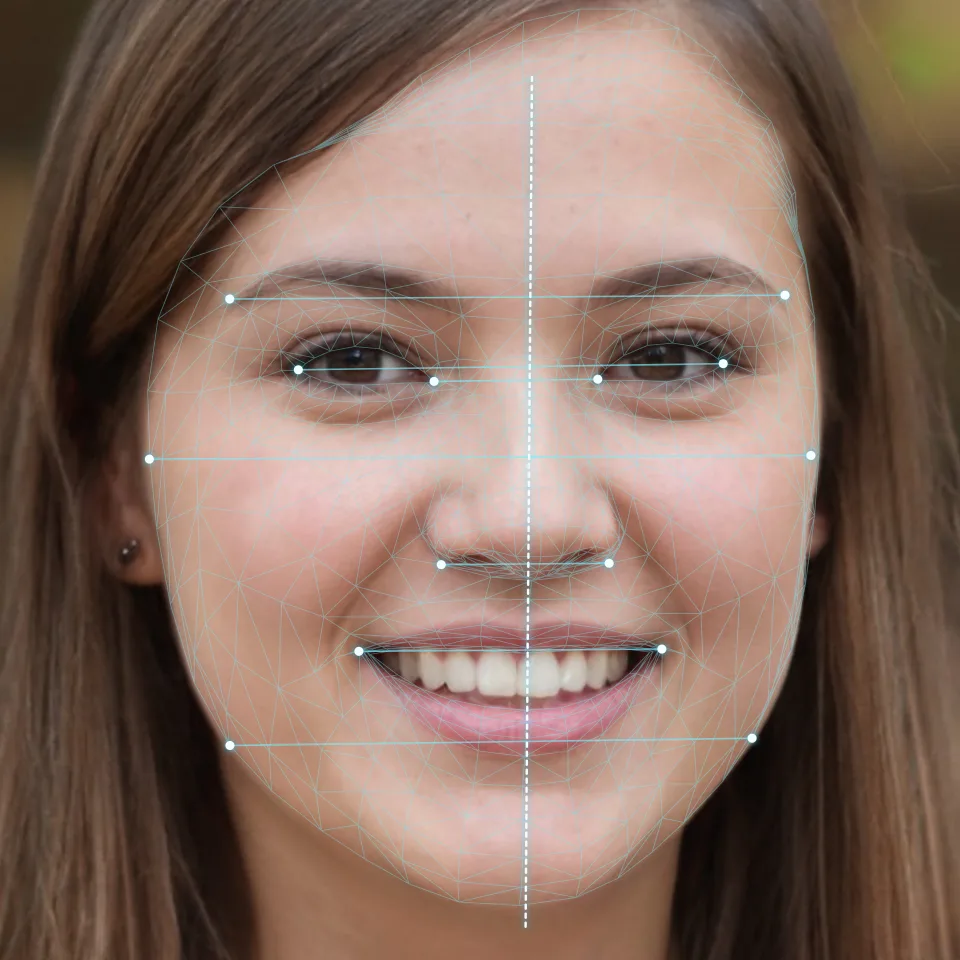
The eyes rarely differ much in size. The lids do: one has a crease and the other a hidden one, or one is heavier and covers more. A higher brow also lifts the lid under it.
Photos inflate it: the nearer eye looks bigger, and side light deepens the darker socket.
What to try:
- Turn the smaller eye slightly toward the camera.
- Make up each eye for its lid: a darker inner corner on the heavier one, liner at the lash roots where the waterline shows.
- Draw the brow you like first, then match the other to it.
A lid that suddenly droops on one side needs a doctor.
One mouth corner sits higher: compare at rest and smiling
At rest the corners are often close. A smile pulls them apart.
Which side leads is not settled. A 2023 study of 37 people found the left corner moved faster and wider in posed smiles; a 2006 study found posed smiles no more lopsided than spontaneous ones. Either way, smiling widens the gap.
A head tilt also slants the mouth line. If the eye line leans the same way, it’s the tilt.
What to try: compare corners in an unsmiling photo, line both lip peaks level, and shoot a wide and a closed-mouth smile to pick from.
One cheek looks fuller: light, hair and angle fool you most
Cheeks and jaw differ most often, and photos fake them most easily. A slight head turn widens the near half. Side light makes the bright half look fuller. Hair over one cheek narrows it.
“I chew on one side, so that side is bigger” is repeated everywhere, but little evidence backs it.
What to try: a little more contour on the fuller side, blush starting at the same height on both, more hair on the fuller side. Before comparing, check that both ears show equally.
The nose tip leans: the nose, or the whole midline?
The nose sits on the midline, so a small lean shows. But the tip is the most forward point, so it moves furthest when the head turns.
Draw a line from between the brows to the chin. If only the tip leaves it, it’s the nose. If tip, lip groove and chin all drift the same way, the head is turned.
A close front camera enlarges the nose and its lean; shoot from 1.5–2 m. A centre part draws a straight line above the nose; a side part removes it.
Every part at a glance: your face or the photo?
| Part | Usually | A photo inflates it by | Try |
|---|---|---|---|
| Eyes | Lid fold, brow height | Nearer eye looks bigger | Smaller eye toward the lens |
| Mouth | One corner lifts more in a smile | Head tilt | Compare at rest; level lip peaks |
| Cheeks, jaw | Lower face differs most | Head turn, side light, hair | Contour the fuller side; hair on that side |
| Nose | Tip off the midline | Head turn, close lens | Shoot from 1.5–2 m; side part |
Take three photos the same way. A difference that stays put is your face; one that comes and goes is the photo. Ways to compare at home are in the face symmetry test guide. A face report built from one front-facing photo is another way to look at the whole face at once.
FAQ
Is it normal for one eye to be smaller?
Yes. Usually the lid fold or brow height differs, not the eye itself. Turn the smaller eye slightly toward the camera and the two look closer.
Why is one side of my face bigger only in selfies?
The front camera sits close, so a slight head turn enlarges the near side. Take one from 1.5–2 m with the rear camera and compare.